Ever Mountain College
The Curriculum
Learning by Doing
At Ever Mountain College, education begins with a simple premise: you cannot think your way into creativity. You have to make something.
Every student begins with a preliminary course called Foundations of Wonder, a rigorous introduction to perception, material study, collaboration, and experimentation. Students draw shadows. Build with scrap. Work in mediums they’ve never touched. Contribute to projects they may never see finished. The goal is not mastery. It is awakening.
From there, the curriculum expands outward.

A Liberal Arts Education—Integrated
EMC does not separate art from life.
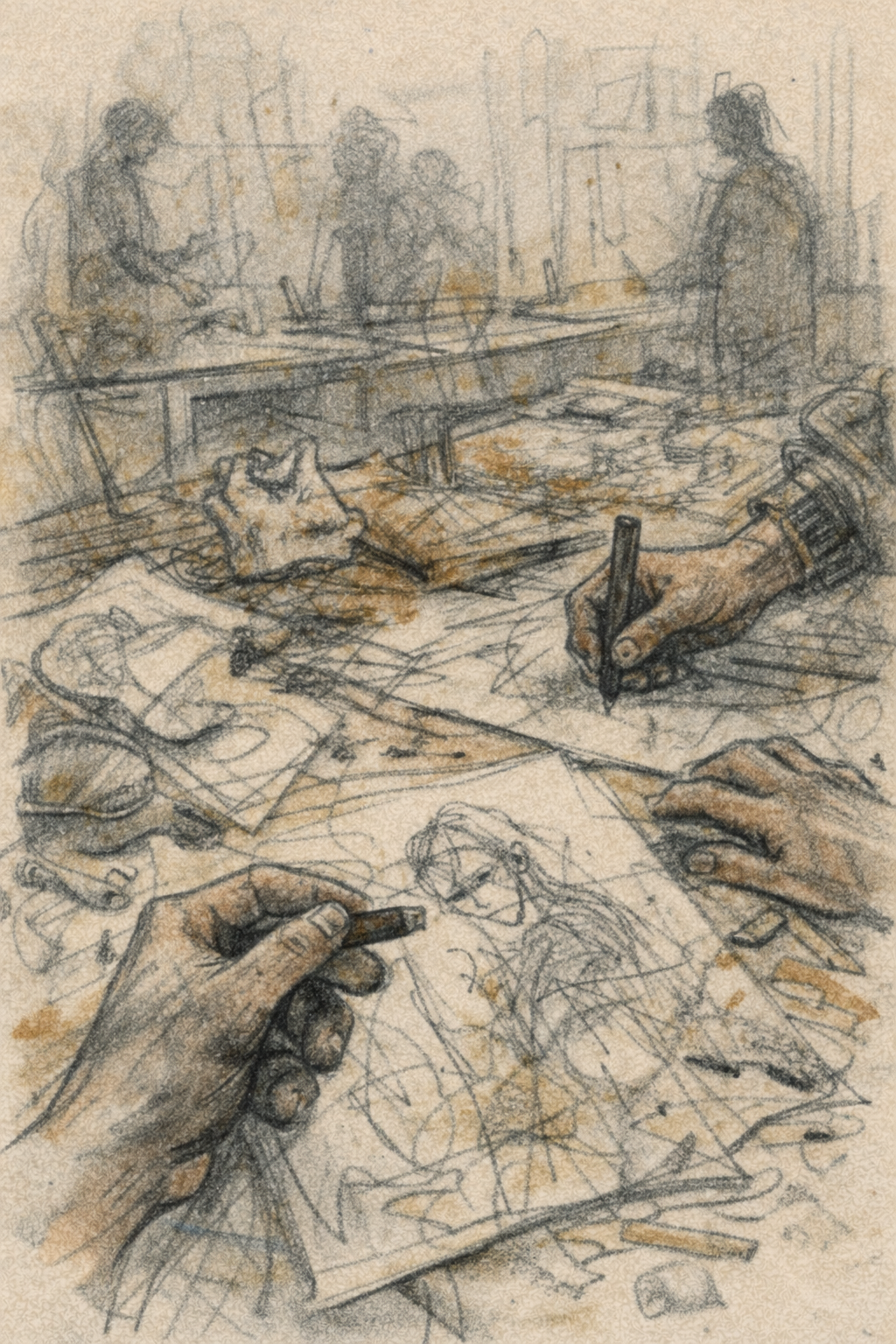
Students study drawing, painting, sculpture, weaving, metalwork, typography, music, literature, history, languages, philosophy, mathematics, economics, and design Workshops in woodworking, ceramics, printing, and building theory sit alongside American History and Classical Greek.
There are no introductory prerequisites. Students are invited to audit widely before choosing a focus. Every student is assigned an empty 8′ x 12′ studio and must build it into something usable.
Many construct their own furniture.
There are no traditional grades.
Learning – like Art - here is not treated as a commodity. It is treated as an experience.
Creative Gauntlets
Each semester, students face a series of creative tests—intense, time-bound challenges designed to sharpen perception, resilience, and invention.
Some are disciplined and exacting:
• 6:00 a.m. life drawing boot camps
• Recreating masterworks in unfamiliar mediums
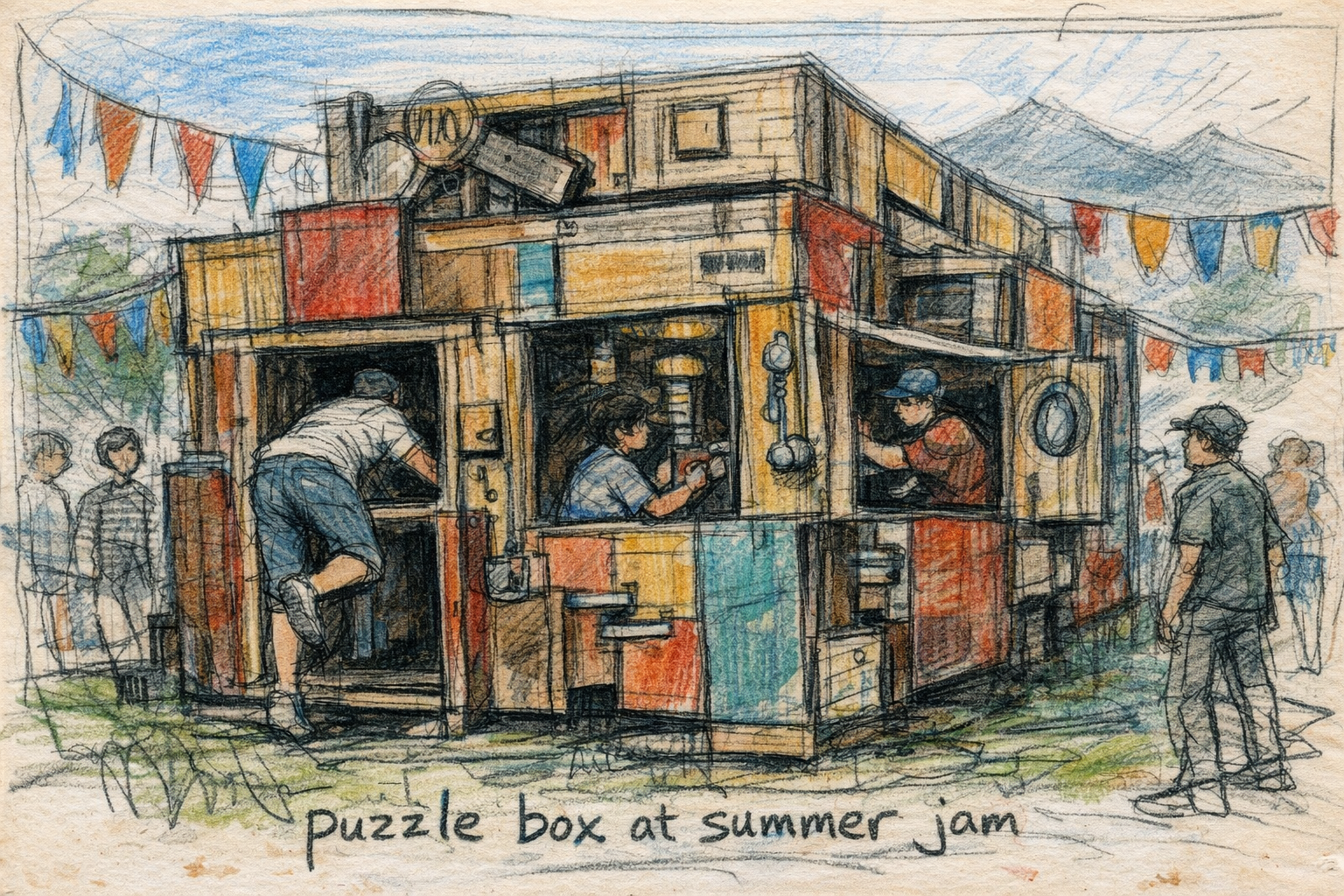
• Building kinetic sculpture from junkyard scrap
Others veer toward the improbable:
• Designing underground installations
• Creating art from discarded pizza boxes
• Translating paradox into performance
The gauntlets are not about winning. They are about discovering what you do when comfort disappears.

Work as Education
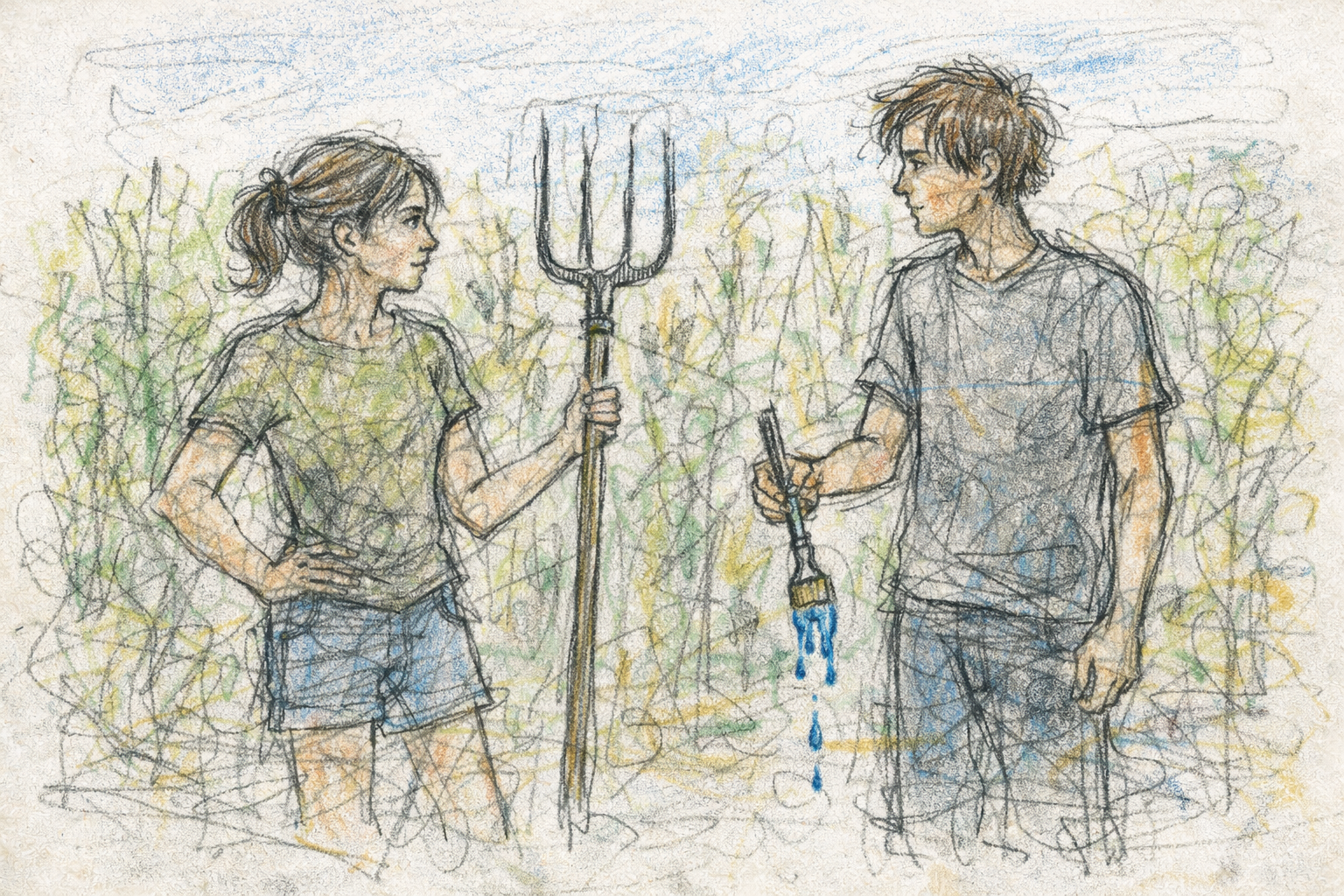
Ever Mountain College operates its own farm and maintains over a thousand acres of forest. Students milk cows, cut corn, split timber, build structures, cook meals, and maintain the grounds. Manual labor is not extracurricular—it is integral.
The philosophy is simple: working with your hands clarifies the mind. The balance between study, making, and physical work shapes the whole person.
Collaboration and Experiment
Interdisciplinary projects are common. A sculptor may work with a poet. A dancer may collaborate with a mathematician. A conceptual artist might co-create with slime mold under Professor Keetz’s watchful eye.
Students are encouraged to question assumptions, bend reality, and explore contradiction. As one professor famously put it: “To see different. To think different. To wake up.”
Why We D0n’t List Every Course
Ever Mountain College has never believed in reducing education to a catalog. The curriculum evolves. New experiments emerge. Old ones mutate.
What you see here are highlights.
The rest you discover by stepping onto the mountain—and into the story.
GET DISPATCHES
The curriculum extends beyond the campus. Dispatches from Ever Mountain brings the College's ideas, conversations, and creative transmissions directly to you — free, on no fixed schedule, when there is something worth sending.